White Flies
Whiteflies: Tiny Pests That Can Take Over Your Plants
Have you ever brushed against a plant and suddenly seen a cloud of tiny white insects flutter into the air? If so, you've probably met one of the most common garden pests—whiteflies.
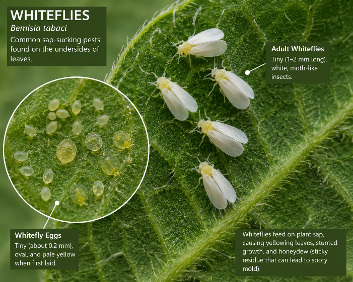
Despite their name, whiteflies are not true flies. They are small sap-sucking insects that are more closely related to aphids and scale insects. They feed by piercing plant leaves and removing the plant's juices, weakening the plant over time.
The good news is that with early detection and proper treatment, whiteflies can be successfully controlled.
How to Identify Whiteflies
Adult whiteflies are:
One of the easiest ways to detect them is to gently shake a branch or leaf. If dozens of tiny white insects suddenly fly into the air before settling back onto the plant, you're likely dealing with whiteflies.
Signs of an Infestation
Whiteflies feed by sucking sap from leaves, reducing the plant's ability to produce food and remain healthy.
Common symptoms include:
As they feed, whiteflies produce a sticky substance called honeydew. This sticky coating can attract ants and encourage the growth of black sooty mold, a fungus that covers the leaves and reduces the plant's ability to absorb sunlight.
Plants Whiteflies Love
Whiteflies attack hundreds of different plants. Some of their favorites include:
Here in Florida, our warm climate allows whiteflies to remain active through much of the year, making regular inspections especially important.
Why Whiteflies Can Be Difficult to Eliminate
Whiteflies have several life stages:
Patience and consistency are the keys to success.
How to Control Whiteflies
Step 1 – Inspect Your Plants Regularly
The sooner you discover whiteflies, the easier they are to control. Make it a habit to inspect the undersides of leaves every week.
Step 2 – Remove Heavy Infestations
If only a few leaves are heavily infested, remove and discard them. This quickly reduces the number of insects and eggs.
For sturdy outdoor plants, a strong spray of water can also knock many whiteflies from the foliage.
Step 3 – Treat the Entire Plant
Because whiteflies spend most of their time on the undersides of leaves, thorough coverage is essential.
My Mom's Garden Secret Insect & Disease Control works by coating the insects. The solution enters through tiny breathing openings called spiracles, allowing water to enter the insect's body, causing it to die. Since whiteflies hide underneath the foliage, spraying both the upper and lower leaf surfaces is important for good control.
Step 4 – Repeat the Treatment
Since new adults continue to emerge from eggs that survive the first application, repeat treatments every 5 to 7 days until no new whiteflies are seen.
Breaking the life cycle is the secret to long-term success.
Preventing Future Problems
Once you've eliminated whiteflies, a few simple habits can help keep them from returning:
Healthy plants are often better able to tolerate minor pest problems and recover more quickly.